Wilson Lake in Alabama is well known as one of the cleanest and most beautiful lakes in North Alabama. It offers boating, fishing, birdwatching, and plenty of scenic spots and hidden gems. If you’re looking for where to stargaze near a lake in north Alabama, Wilson Lake, near Florence and Muscle Shoals, is also one of the best-kept secrets for night sky viewing. It provides an experience our neighbors in bigger cities like Nashville, Birmingham, Huntsville, and Atlanta rarely get to enjoy.
This guide covers what makes Wilson Lake, Alabama, a prime spot for stargazing (and even seeing the Milky Way), the best times and spots to see an unobstructed starry sky, and tips for enhancing your stargazing experience at Peninsula at Wilson Lake.
What Makes Wilson Lake Good for Stargazing?
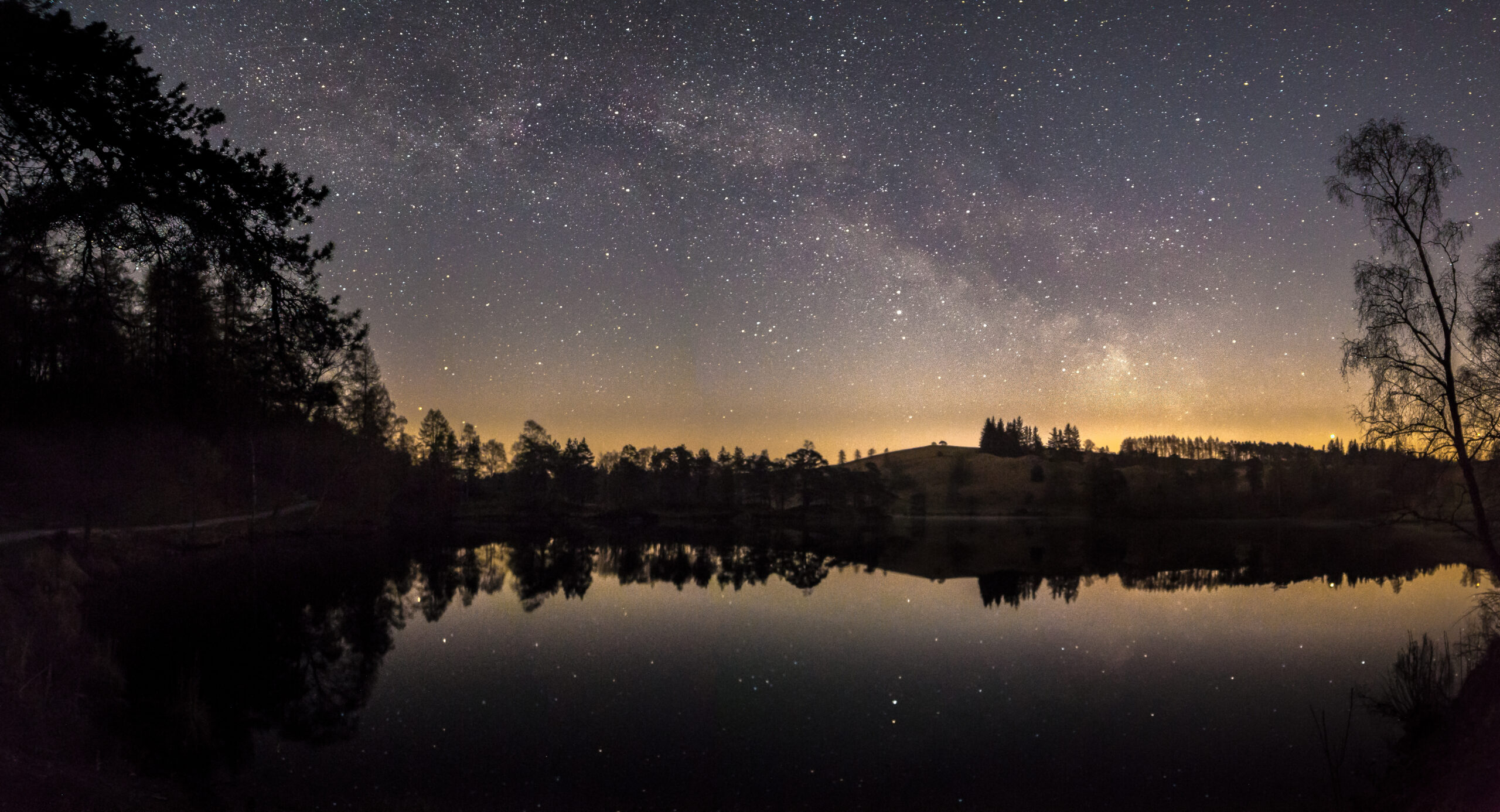
The open water, quiet shorelines, and dark skies make Wilson Lake one of the best places in North Alabama to stargaze. This isn’t just an opinion. There is a standardized ranking system called the Bortle scale that serious stargazers use to measure sky darkness, which is the best indicator for stargazing.
Wilson Lake, Alabama, is Bortle Class 4. Along quieter shorelines, darker pockets are reported to be closer to Class 3. This is the threshold most dedicated observers consider the entry point to a genuinely rewarding night sky-viewing experience. Stars are bright and clear, the Milky Way is visible and detailed, and deep-sky objects are accessible through binoculars.
Beyond sky darkness, the lake itself makes Wilson Lake an ideal spot for stargazing. The open water and wide, unobstructed horizons offer a backdrop that big cities and suburban backyards simply cannot match.
The Best Times of Year to Stargaze at Wilson Lake
As long as the sky is clear, there isn’t a bad time to stargaze at Wilson Lake. However, there are better months and seasons, depending on what you hope to see.
No matter the season, just be sure to check the moon phase. Within a few days of a full moon, moonlight washes out faint objects the same way city glow does. If you want to admire the moon, that’s a beautiful night for it, but if you’re hoping to stargaze, check the lunar calendar before heading out.
A Month-by-Month Guide to the Wilson Lake Night Sky
March through September: Milky Way Season
From late March through late September, the Milky Way is a major highlight at Wilson Lake. The galactic core is most prominent in the southern sky during clear, new-moon nights of July and August. These months especially offer peak Milky Way visibility, best enjoyed in the early morning hours.
October: The Best Stargazing Month in North Alabama
October stands out for its crisp, clear conditions ideal for stargazing. It’s highlighted by lower humidity, comfortable temperatures, and lingering Milky Way views early in the evening. Local astrophotographers and amateur astronomers often recommend October for its consistently excellent skies.
November through February: Sharp Skies and Winter Showpieces
From November through February, expect sharper skies and excellent visibility for winter constellations, such as Orion. This period also includes the annual highlight of the Leonid meteor shower each November. While the Milky Way’s core isn’t visible, stars and deep-sky objects are more defined, making this season a favorite for constellation watching.
Seasonal Constellations Visible From Peninsula at Wilson Lake
Spring (March through May)
Leo, Virgo, and Boötes dominate, and the Big Dipper reaches its highest point of the year. Follow the arc of its handle to the bright orange star Arcturus, then carry that arc further to Spica in Virgo. Both are naked-eye visible and easy to find once you know the trick.
Summer (June through August)
The Summer Triangle, made up of Vega, Altair, and Deneb, anchors the overhead sky. Scorpius and Sagittarius rise in the south. That southern sky is the core of the Milky Way. The Perseid meteor shower peaks around August 11 to 13 and is one of the most active of the year.
Fall (September through November)
At 2.5 million light-years away, the Andromeda Galaxy becomes naked-eye visible in dark enough conditions. The Great Square of Pegasus and Cassiopeia’s distinctive “W” shape anchor the sky. The Geminid meteor shower peaks December 13 to 14.
Winter (December through February)
Orion is the centerpiece of winter. Its three-star belt points directly toward Sirius, the brightest star in the night sky after the Sun.
Year-Round
The Big Dipper, Polaris, and Cassiopeia never set at Wilson Lake’s latitude, and Polaris, the North Star, sits almost perfectly above true north and never moves.
The Best Spots to Stargaze at Wilson Lake, Alabama
With Bortle Class 4 skies, open water, and an unobstructed southern horizon, there are plenty of great places to stargaze in and around Wilson Lake, Alabama. Here are some of the best.
1: Shoreline Access Points
For a 360-degree sky view, head out on the boat and anchor in a quiet cove or open stretch of lake with minimal lighting and a clear line to the south. With no artificial light nearby and a completely open southern horizon, you’ll quickly see why local photographers visit Wilson Lake’s less-trafficked shoreline pull-offs for night sky shooting.
2: Rural Roads and Open Overlooks
If you are looking for a stargazing spot off the water, try west and southwest of the lake. There are several quiet roadsides, parking areas, and overlooks that offer broad sky views and little through traffic. Use a light-pollution map before you go, since sky quality can vary widely over a short drive.
3: Parks and Recreation Areas
Rockpile Recreation Area (~10 miles)
Just below Wilson Dam along the Tennessee River, the TVA Rockpile Recreation Area offers open riverfront and minimal developed lighting. Not only is the open sky here great for stargazing, but it’s also a local favorite for sunsets. Come early to watch the sun go down over the water, then stick around for a night of relaxing under the stars.
McFarland Park (~11 miles)
If you’re looking for a relaxed evening of naked-eye stargazing, McFarland Park in Florence has open views over the Tennessee River. It’s an easy, low-commitment outing, close to restaurants and downtown Florence if you want to make a full evening of it.
Joe Wheeler State Park (~37 miles)
Situated on Wheeler Lake, directly adjacent to Wilson Lake to the west, Joe Wheeler State Park offers 2,550 acres of open meadows and lakeside overlooks. Park rangers lead guided stargazing events. The park is one of the most consistently recommended stargazing destinations in northwest Alabama.
Bankhead National Forest (~45 to 60 miles)
Bankhead National Forest in northwest Alabama is one of the most frequently cited stargazing spots among Alabama astrophotographers. Remote, forested, and well away from development lighting, it offers darker conditions ideal for more advanced stargazing. Because the area is remote and underdeveloped, be sure to verify access points and parking before you go.
4: Guided Observing Nights and Observatories
Shoals Astronomy Club (Locations Vary)
The Shoals Astronomy Club is a community of amateur astronomers. They offer memberships, but the public is always welcome to join observing nights. Check their schedule for upcoming events and observing nights throughout the year.
UNA Planetarium and Observatory (~15 minutes)
Located on the campus of the University of North Alabama in Florence, the UNA Planetarium and Observatory has been a community astronomy resource since 1964. They host weekly public nights covering what’s currently in the night sky, followed by telescope viewing when weather allows.
Wernher von Braun Planetarium (~1 hour)
If you are willing to make the roughly one-hour drive north, the Wernher von Braun Planetarium at Monte Sano State Park in Huntsville offers year-round organized stargazing programs, connecting Wilson Lake residents to the broader north Alabama astronomy scene.
5: Peninsula at Wilson Lake
Last but not least, if you live at Peninsula at Wilson Lake, you can stargaze without ever leaving the community. Depending on your lot and home placement, you could sit under the stars in your backyard, or step down to the water’s edge for an open horizon view over the lake. You could even host a neighborhood stargazing night at the sunset pavilion or along the water.
How to Host a Stargazing Event at Peninsula at Wilson Lake
You don’t need to be an astronomer to pull off a stargazing party; all it takes is a little bit of planning.
Pick an Ideal Date and Time
Check the lunar calendar. The best stargazing happens within a few days of a new moon, when the sky is darkest. Also, check the weather forecast; clear and dry is the goal.
Plan to begin after full darkness falls, which varies by season but typically means 8:30 PM or later in summer and 7 PM or earlier in winter. Plan for the event to last around 60 to 90 minutes. This is long enough to settle in, find a few targets, and enjoy the experience.
Name the Night
Not required, but giving your stargazing event a theme adds focus and makes the event more memorable.
Prepare Your Guests and Surroundings
If possible, turn off any white lights near the viewing area. Also, ask guests to arrive a few minutes early so their eyes can adjust. The difference in sky visibility after 20-30 minutes of dark adaptation is significant.
Set Up Viewing Stations
Set up two or three stations with shared stargazing kits that include:
- Binoculars for viewing star clusters and the moon
- Telescopes for close-up planet and Moon views
- Red flashlights for moving around and reading maps
- Printed seasonal sky maps of what’s visible that night
- Star cards or QR codes to download stargazing apps
Naked-eye stargazing is a great starting point, but having viewing stations will make the experience significantly more exciting for guests of all skill levels.
Stargazing Equipment Recommendations for Beginner Astronomers
On a clear, dark night, on Wilson Lake, the naked eye alone will show you plenty of stars. But a few simple additions can make your stargazing experience better.
- The Basics: Bring a chair and blanket, insect repellent if you’re out in summer, and in spring and winter, dress in layers; temperatures near the water can drop quickly after sunset.
- Red Flashlight: White light destroys night vision, and your eyes need a full 20 to 30 minutes to dark-adapt. A red flashlight lets you move around or read a star map without disrupting your viewing experience.
- Binoculars: A 10×50 pair is the standard beginner recommendation. They’re powerful enough to show real detail on the Moon and in star clusters, wide enough to sweep across constellations, and easy to use right out of the case.
- A Telescope: If you want a deeper stargazing experience, bring a telescope. An 8-inch Dobsonian reflector is a good choice for casual stargazers. It features a simple design, no electronics, and no alignment procedure.
- Phone/Stargazing Apps: Before you head out, download stargazing apps. Star Walk 2 and Stellarium preview what will be visible. SkyView and SkySafari use your camera and GPS to overlay real-time information about constellations and planets.
From Dusk to Dawn, There’s a Lot to Love at Peninsula at Wilson Lake
At Peninsula at Wilson Lake, the same open horizon that makes mornings on the dock worth waking up for makes the night sky worth staying up for.
To see what Wilson Lake has to offer from sunrise to sunset and beyond, and what it’s like to live in the Peninsula community every day, we have plenty of helpful articles that cover luxury lake life at Peninsula, water activities, and scenic spots and events near our gated community.
Here are a few popular blogs to get you started:
- Top Reasons to Call Peninsula at Wilson Lake Home
- Meet the Community: Life at Wilson Lake from the Locals’ Perspective
- Exploring the Ultimate Alabama Waterfront Lifestyle: Living at Peninsula at Wilson Lake
- A Guide to Outdoor Activities Around Wilson Lake
- A Year-Round Getaway: Seasonal Activities at Peninsula
If you’re ready to learn more about life at Peninsula at Wilson Lake, we’d love to show you. Contact us to connect with our team or schedule a visit.